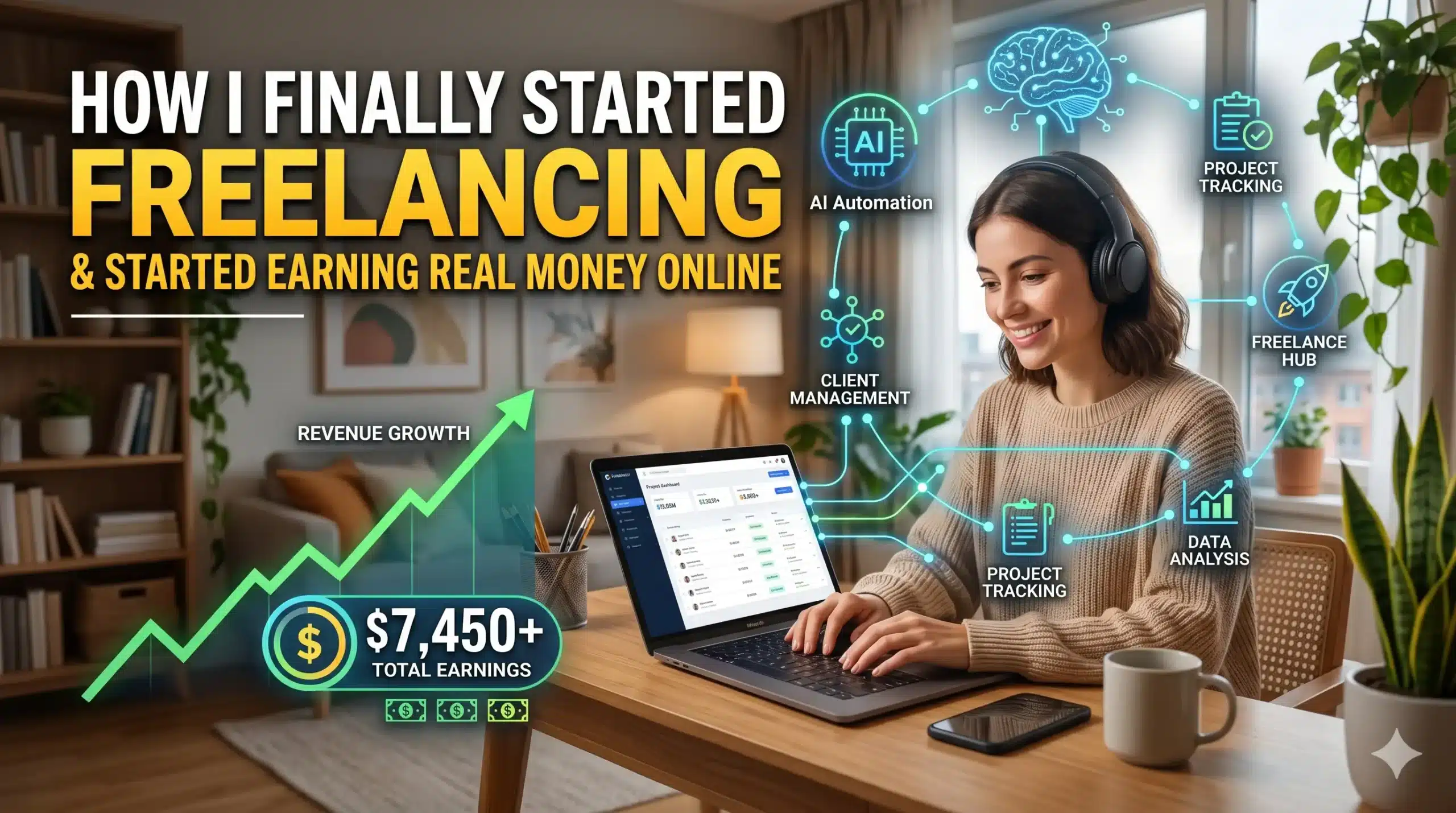
How I Finally Started Freelancing and Started Earning Real Money Online (And What I Wish I’d Known Sooner)

A couple of years back, in late 2024, I was sitting in my tiny apartment, staring at my laptop after another exhausting day at a 9-5 job that paid the bills but left me drained. I had some decent writing skills; basic graphic design from tinkering with Canva and Figma; and a growing interest in AI tools, but no idea how to turn them into actual income on my own terms.
One evening, after a particularly rough week, I decided to try freelancing. My first gig? A $50 blog post for a small startup I found on Upwork. It took me way longer than it should have; the client asked for endless revisions, and I barely broke even after platform fees. But that small win lit a spark. Fast forward to 2026, and freelancing now makes up the bulk of my income, enough to cover rent, travel, and even save a bit. It’s not always smooth, but it’s flexible and rewarding when you figure out the system.
If you’re in a similar spot, burned out, wanting more control over your time, or just needing extra cash, here’s what I’ve learned from actually doing this, including the screw-ups that cost me time and money.
Why Freelancing Still Works in 2026 (Even With AI Everywhere)
People love to say AI is killing freelancing, but from what I’ve seen, it’s creating more opportunities than it destroys. Clients still need humans to steer the AI, add real strategy, fix weird outputs, and build relationships. Last year, I helped a few businesses integrate AI into their content workflows, and those projects paid way better than straight writing gigs.
The freelance economy is massive; freelancers in the US alone generated huge earnings recently, with many skilled folks pulling in solid six figures annually if they specialize. But it’s not passive income. It takes consistent effort, especially at the start.
Step 1: Figure Out What You Can Actually Offer
Don’t try to be everything to everyone. I wasted weeks offering “digital marketing” broadly before narrowing down.
Look at your existing skills. Good at writing? Video editing on CapCut or Premiere? Designing social media graphics? Coding simple websites? Teaching something? Even customer support or virtual assistance counts.
Pro tip from experience: Pick something you don’t completely hate. I started with content writing because I enjoyed researching and explaining tech stuff. In 2025-2026, skills like AI-assisted content creation, prompt engineering, performance marketing, and niche graphic design (think Canva + Midjourney workflows) are hot.
If you’re starting from zero, spend a month learning via free resources: YouTube, Coursera, or free tiers of tools like ChatGPT/Claude for practice. I built my first portfolio pieces by creating fake client and project samples, blog posts, mock ad campaigns, etc.
Step 2: Build a Simple Portfolio (Even If It’s Not Fancy)
You don’t need a custom website right away. I started with a free Carrd page and a Google Drive folder of samples.

- Write 3-5 strong pieces showcasing your best work.
- For design/video: Use Behance or a simple Notion site.
- Include results where possible (e.g., “This email sequence I drafted increased open rates by X% for a client”).
Real talk: My early portfolio was mediocre, but it was enough to land gigs. Clients care more about reliability than perfection at the beginning.
Step 3: Pick Your Platforms and Start Applying
Here’s where I made my biggest early mistake, spreading myself too thin across too many sites.
Top platforms I’ve used in 2025-2026:
- Upwork: Great for long-term clients and hourly work. The proposal system is competitive, but quality proposals win. I land most of my steady retainers here.
- Fiverr: Perfect for quick gigs and building momentum with “gigs” (pre-packaged services). I use it for one-off design or writing packages. Optimize your gig images and descriptions heavily.
- Freelancer.com: More bidding, but good for beginners.
- LinkedIn: Underrated. Post regularly, message people in your network, and optimize your profile. Many of my best clients came from here after I started sharing my work.
- Others like Toptal (if you’re experienced) or niche sites.
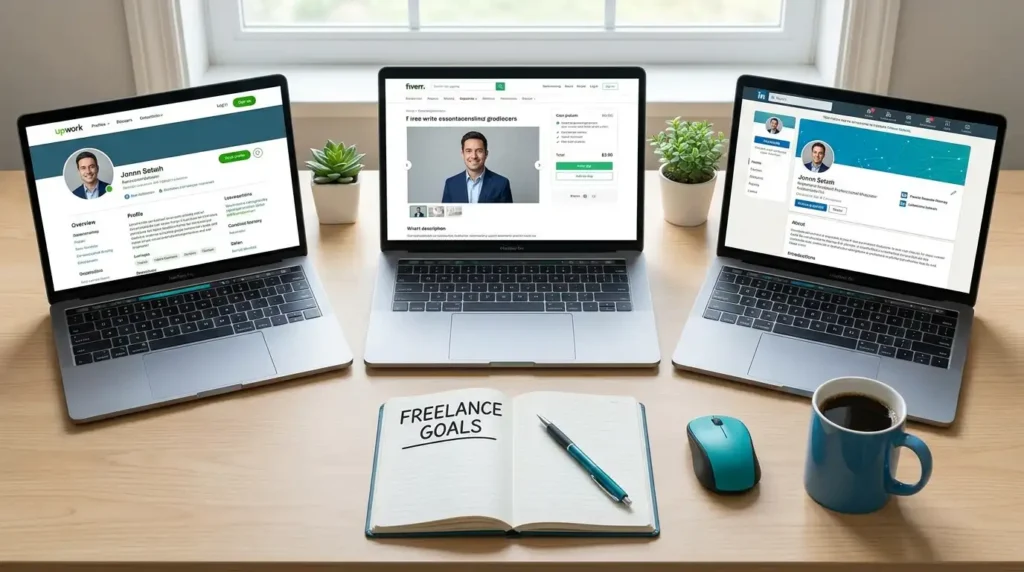
Start with 1-2 platforms. On Upwork, I send 5-10 tailored proposals a day initially. Personalize them; mention something specific from the job post. Generic ones get ignored.
Expect rejections. My first 20-30 proposals were mostly crickets. Then I got better at highlighting value.
Step 4: Pricing—Don’t Undercut Yourself
This was painful. I started at ridiculously low rates ($10-15/hour) to “build reviews.” It attracted nightmare clients who expected 24/7 availability.
Lesson learned: Research rates on the platforms for your niche. Beginners might start at $20-40/hour depending on skill. Raise as you get reviews. I now charge $60-100+ for specialized work, and clients pay it because I deliver results and communicate well.
Use a fixed price for clear scopes and hourly for ongoing stuff. Always have a contract (even simple ones via platforms or tools like HelloSign).
Step 5: Deliver, Communicate, and Get Paid
Over-communicate. I send weekly updates even if not asked. Use tools like Slack, Notion, or Trello for project management.
Tools that save my sanity:
- Google Workspace or Notion for organization.
- Grammarly + Claude for writing.
- Canva Pro / Figma for design.
- Stripe/PayPal for direct payments once clients move off-platform.
- Toggl for tracking time (helps with invoicing).
Set boundaries; don’t check messages at midnight.
Real-Life Wins and a Few Facepalms
One of my early successes: A client needed ongoing blog content for their SaaS site. Started with one post, turned into a monthly retainer. That stability changed everything.
Unexpected result: Diversifying saved me. When writing slowed due to AI, I pivoted to helping clients use AI tools effectively: prompt audits and workflow setup. Paid better, too.

Mistake: Saying yes to a big project I wasn’t ready for in early 2025. Scope creep killed my weekends, and the client was unhappy. Now I define the scope clearly upfront and build in revision rounds.
Another: Ignoring taxes. Set aside 25-30% of earnings. Use tools like QuickBooks or FreshBooks for invoicing and tracking.
Common Mistakes That Keep Beginners Stuck
- Chasing every gig: Focus on a niche. “AI content for tech startups” beats “I write anything.”
- Poor profile/photos: A professional headshot and a complete profile matter.
- No follow-up: After a project, ask for testimonials and referrals.
- Burnout: Schedule non-negotiable breaks. I work 4-5 focused days a week now.
- Treating it like a hobby: Track income/expenses from day one.

Scaling Beyond Platforms
Once you have 3-5 good clients and reviews, build your own presence. Email list, personal site, Twitter/LinkedIn content. Many of my clients now come directly. Direct clients pay better and have fewer fees.
Consider retainers for steady income. One client paying $2k/month is better than chasing ten $200 gigs.
My Setup and Routine That Works
- Laptop: Decent mid-range (MacBook Air or Windows equivalent).
- Internet: A reliable connection is non-negotiable.
- Daily: 1-2 hours prospecting early on, then deep work blocks.
- Weekly: Review finances, learn one new thing (AI tool, skill tweak).
In 2026, I’m more selective. Quality over quantity.
FAQ: Answering the Questions I Get All the Time
1. How much can a beginner realistically earn in the first few months? It varies wildly. Many make $500-2,000 in the first 3-6 months with consistent effort. I was around $1k after a couple of months of grinding. Top performers scale faster by niching quickly.
2. Do I need a degree or fancy certifications? Nope. Skills and portfolio trump degrees. Clients care about results.
3. Is freelancing stable? Less stable than a salary at first, but you can build stability with retainers and multiple clients. I had dry months but learned to save and diversify.
4. What if I’m not tech-savvy? Plenty of non-tech gigs: virtual assistance, social media management, bookkeeping, translation, etc. Start simple.
5. How do I handle clients who don’t pay? Use platform payment protection initially. For direction, use contracts and milestones. I’ve only had one bad non-payment, caught early.
6. Best way to learn skills fast? Practice on real (or mock) projects. Free YouTube + paid courses on Udemy/Coursera when needed. AI tools speed this up massively.
7. Should I quit my job immediately? No. Start as a side hustle until you have consistent income replacing 70-100% of your salary.
8. How competitive is it in 2026? Very, but specialists win. Generic services struggle; specific value wins.
9. What tools should I invest in first? Free/cheap: Canva, Google Docs, ChatGPT. Then, platform subscriptions are as needed.
10. Can I freelance internationally? Yes. Time zones can be tricky, but many clients are flexible. Payment via Wise or PayPal helps with currency.
11. How do taxes work? Track everything. Consult a local accountant. In many places, you’re self-employed and handle quarterly estimates.
12. Is AI replacing freelancers? It’s changing things, but humans who use AI well are in demand. Learn to collaborate with it.
Disclaimer
This is based on my personal experiences and observations as of mid-2026. Results aren’t guaranteed; success depends on your skills, effort, market conditions, location, and luck. Freelancing involves financial risk, and past performance doesn’t predict future earnings. Always do your own research, consider professional advice for taxes/legal stuff, and never invest money you can’t afford to lose in “get rich quick” schemes. I’m sharing what worked for me to help others, not as financial advice.
Freelancing gave me freedom I didn’t have before, working from a cafe in a new city last month while still hitting deadlines. It won’t happen overnight, and there will be tough weeks. But if you stay consistent, learn from rejections, and focus on delivering real value, it can work out.
What’s your first step going to be? Drop a comment if you’ve tried this or have questions; happy to chat. You’ve got this.

Written by: Krunal,
Founder & Tech Writer at ToolsVila.online
I help people solve everyday tech problems with simple and practical guides. Over 6 years of hands-on experience with WordPress, Windows, Android & digital tools.